Robots on the Clock: How Intelligent Energy Management for Robot Fleets Is Reshaping SME Operations
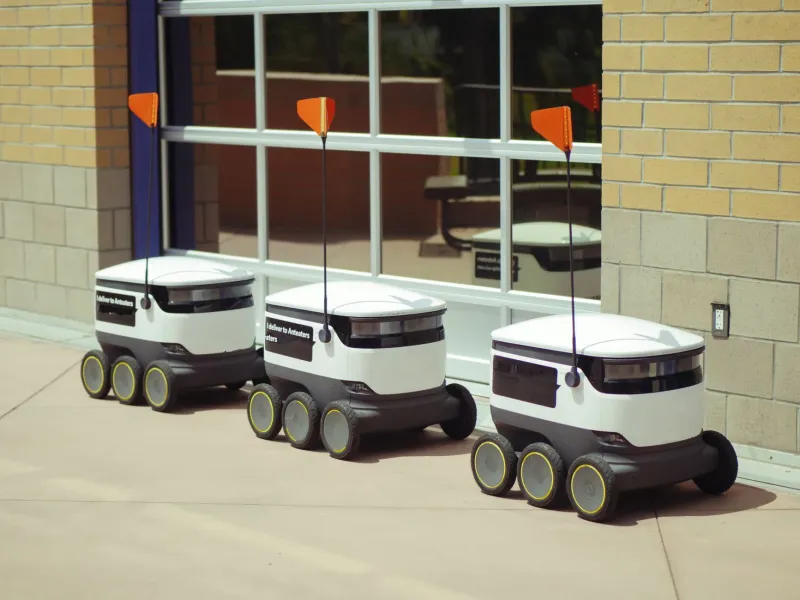
For years, industrial robotics was the exclusive domain of large manufacturers with deep capital reserves and dedicated engineering teams. That landscape has shifted considerably. Autonomous mobile robots (AMRs), collaborative robots, and automated guided vehicles are now within reach of small and medium-sized enterprises across logistics, manufacturing, healthcare, and retail. But as more SMEs bring robotic systems onto their floors, a new operational challenge has quietly emerged: keeping those robots charged, coordinated, and productive.
Energy management for robot fleets — once an afterthought — has become a genuine operational discipline. And the businesses that treat it as such are discovering meaningful advantages in uptime, cost control, and scalability.
The Hidden Operational Cost of Robotic Downtime
When an SME invests in a fleet of autonomous robots, the expectation is efficiency. The reality, for many operators, includes unexpected pauses, charging bottlenecks, and the kind of unplanned downtime that quietly erodes the return on that investment.
Unlike human workers who can grab a coffee and return to their station, a robot that runs out of charge in the middle of a shift creates a cascade of logistical problems. In a warehouse environment, a stalled AMR can block pathways, disrupt pick-and-pack sequences, and require manual intervention — precisely the kind of labor cost the robot was meant to eliminate.
For smaller operations running lean teams, this is not a minor inconvenience. It is a direct hit to throughput and, ultimately, to margin.
What Fleet Energy Management Platforms Actually Do
The emergence of dedicated energy management software for robot fleets addresses this challenge directly. These platforms — of which WiBotic Commander is a notable example in the market — are designed to give operators centralized visibility and control over how energy flows through their robotic systems.
At their core, these platforms perform several critical functions:
Automated Wireless Charging Coordination: Rather than relying on operators to manually dock robots for charging, modern systems use wireless charging infrastructure that robots can access autonomously during natural workflow pauses. The software coordinates which robots charge when, preventing bottlenecks at charging stations and ensuring no single unit monopolizes resources.
Real-Time Battery Monitoring: Operators gain visibility into the battery state of every robot in their fleet, often through a single dashboard. This allows for proactive intervention before a robot's charge becomes critically low — shifting it to a charging station during a low-demand period rather than waiting for an emergency.
Predictive Scheduling: More sophisticated platforms layer in predictive analytics, learning usage patterns over time and pre-positioning robots for charging based on anticipated demand cycles. For an SME running multiple shifts or handling seasonal volume spikes, this kind of intelligence can be the difference between seamless operations and costly disruptions.
Fleet-Wide Optimization: Rather than managing each robot in isolation, energy management platforms treat the fleet as a system. Charging schedules are balanced across units to ensure maximum collective uptime, not just individual robot health.
Why This Matters Specifically for SMEs
Large enterprises operating robot fleets typically have dedicated robotics engineers and operations technology teams whose job it is to manage exactly these kinds of challenges. SMEs rarely have that luxury. An operations manager at a mid-sized fulfillment center is likely wearing multiple hats, and troubleshooting robot charging conflicts is not where their expertise or attention is best deployed.
This is precisely why purpose-built energy management platforms represent a meaningful value proposition for smaller operators. They automate the complexity that would otherwise require specialized human oversight, effectively giving SMEs access to enterprise-grade fleet intelligence without the enterprise-grade headcount.
There is also a financial dimension that SME owners should weigh carefully. The cost of robotic downtime — in lost throughput, manual labor substitution, and delayed fulfillments — compounds quickly. Businesses that have implemented systematic energy management report measurable improvements in overall equipment effectiveness (OEE), a metric that directly influences whether a robotic investment delivers its projected ROI.
Integration with Broader Operations Technology
One of the more important considerations for SMEs evaluating fleet energy management tools is how those tools integrate with the rest of their operational technology stack. A platform that operates in isolation — providing energy data without connecting to warehouse management systems, ERP platforms, or scheduling software — delivers only a fraction of its potential value.
The most effective implementations treat robot fleet energy management as one layer within a broader operational intelligence framework. When charging schedules are informed by order volume forecasts pulled from an ERP system, or when battery status alerts feed into a workforce management platform that can redeploy human staff to cover a temporary gap, the value multiplies significantly.
For SMEs in the early stages of robotic deployment, this integration question is worth raising with vendors before committing to any platform. Asking how the system communicates with existing software — and what APIs or middleware are required — can prevent costly retrofitting down the line.
Planning for Scale
Another dimension SME operators often underestimate is scalability. A business deploying three or four robots today may be operating a fleet of fifteen or twenty within three years if the initial investment performs as expected. Energy management systems that work adequately at small scale can become significant bottlenecks as fleet size grows.
When evaluating platforms, SME leaders should ask vendors directly about fleet size thresholds, charging infrastructure requirements at scale, and how the software handles the increased complexity of larger deployments. The goal is to choose a system that grows with the business rather than one that needs to be replaced at the next inflection point.
A Strategic Investment, Not Just a Technical One
It would be easy to categorize fleet energy management as a purely technical concern — something for IT or facilities teams to sort out. That framing undersells its strategic significance.
For an SME that has committed to robotic automation as a competitive differentiator, ensuring those robots operate at peak efficiency is a core business imperative. Downtime is not just an operational inconvenience; it is a signal that the investment is underperforming. Conversely, a well-managed fleet that runs reliably across shifts, adapts intelligently to demand fluctuations, and requires minimal human intervention is a genuine source of competitive advantage — particularly against rivals who have deployed similar hardware but lack the operational discipline to extract its full value.
American SMEs that are serious about automation should treat energy management not as an afterthought to robotic deployment, but as a foundational element of it. The businesses that build this discipline early will be better positioned to scale their robotic operations efficiently — and to capture the productivity gains that justify the investment in the first place.